Skip to content
Home / Blog / Choosing the right PMS: Why...
Anand Systems Inc.

Choosing the right PMS: Why ASI PMS Consistently Stands Out

Relevant Contents

Subscribe

Most PMS platforms can do the basics.

Reservations? ✔️
Check-ins and check-outs? ✔️
Room status? ✔️

That’s not where the real difference lies.

The real difference shows up during a busy shift, at month-end reporting, and as operations grow more complex. That’s where some systems quietly help, and others quietly slow teams down.

This comparison looks at how PMS platforms generally perform in the areas that actually affect hotel operations, backed by industry research, and highlights where ASI PMS has a clear structural advantage.

1. One System vs. Too Many Tabs Open

If your team needs multiple logins just to finish a routine task, the system isn’t helping—it’s multitasking against you.

What industry research shows
Deloitte’s Hospitality & Travel Technology Outlook found that hotels using disconnected systems spend 20–30% more time reconciling data and fixing avoidable errors.

Many PMS platforms rely on add-ons for reporting, accounting, or analytics. Over time, this turns daily work into system-hopping.

Where ASI PMS shines
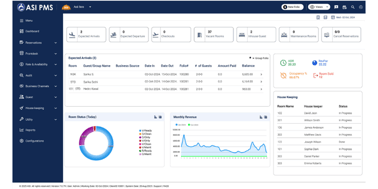
ASI PMS is built as a central system of record, keeping core operations, reporting, and controls in one place.

What that means in real life

  • Fewer logins
  • Less copy-paste work
  • Data everyone can trust

Less juggling. More doing.

1. One System vs. Too Many Tabs Open

If your team needs multiple logins just to finish a routine task, the system isn’t helping—it’s multitasking against you.

What industry research shows
Deloitte’s Hospitality & Travel Technology Outlook found that hotels using disconnected systems spend 20–30% more time reconciling data and fixing avoidable errors.

Many PMS platforms rely on add-ons for reporting, accounting, or analytics. Over time, this turns daily work into system-hopping.

Where ASI PMS shine

ASI PMS is built as a central system of record, keeping core operations, reporting, and controls in one place.

What that means in real life

  • Fewer logins
  • Less copy-paste work
  • Data everyone can trust

Less juggling. More doing.

ASI PMS-Dashboard


2. Growth Without the Growing Pains

Adding rooms or properties shouldn’t feel like changing jobs.

What industry research shows
Skift Research highlights workflow inconsistency as one of the biggest challenges for growing hotel groups, especially when systems weren’t designed to scale.

Many PMS platforms work well early on, then introduce extra steps, duplicate work, and retraining as complexity increases.

Where ASI PMS shine

ASI PMS is designed to grow alongside operations, keeping workflows familiar even as scale increases.

What that means in real life

  • Teams don’t have to relearn the system
  • Processes stay consistent
  • Growth feels controlled, not chaotic
Prabha Blog - multi property (14)


3. Reports You Actually Use (Not Just Export)

If reporting starts with “export to Excel,” the system isn’t doing enough.

What industry research shows
Hotel Tech Report reviews point to limited built-in reporting consistently as a top PMS frustration, pushing teams toward spreadsheets for everyday analysis.

Where ASI PMS shine

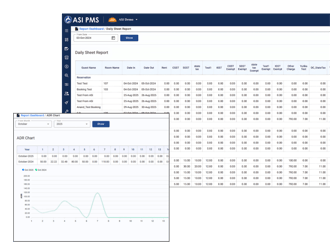
ASI PMS includes 50+ built-in operational and performance reports (based on enabled modules), covering front-desk activity, occupancy, revenue, cashiering, and audits.

What that means in real life

  • Fewer spreadsheets
  • Faster answers
  • Less guesswork

Good reports don’t just inform, they save time.

Prabha Blog - multi property (15)


4. Speed When the Lobby Is Full

Peak check-in is where PMS performance is tested.

What industry research shows
Hotel Tech Report reviews consistently list front-desk slowness during peak check-in/check-out among the top operational complaints, especially for busy properties.

Where ASI PMS shine

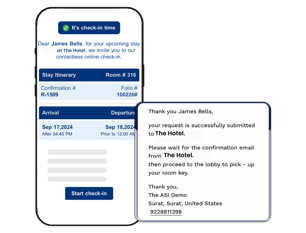
ASI PMS is built for high-transaction environments and includes a self check-in feature along with a mobile app that allows teams to manage key tasks on the go, helping reduce front-desk congestion during peak hours.

Why it matters
Faster check-ins, shorter queues, smoother arrivals, and fewer trips back to the front desk.

Prabha Blog - multi property (16)


5. Integrations That Help, Not Hurt

Integrations are powerful, until no one knows where the data broke.

What industry research shows
Hospitality IT studies warn that integration-heavy setups often struggle with data ownership and accountability.

Where ASI PMS shine

ASI PMS supports integrations while remaining the system of record, keeping data clean and troubleshooting straightforward.

What that means in real life

  • Clear data flow
  • Faster issue resolution
  • Fewer "whose system is this?" moments
Prabha Blog - multi property (18)


6. Support That’s There When You Need It

Problems don’t follow business hours.

What industry research shows
Hotel Tech Report data consistently ranks support responsiveness as a major factor in PMS satisfaction.

Where ASI PMS shine

ASI PMS provides:

  • Live support available 24*7*365 days a year
  • A customer portal to log, track, and manage requests

What that means in real life

  • Faster help during live operations
  • Clear visibility into issue status
  • More confident teams on the floor
Prabha Blog - multi property (19)


Putting it all together

When PMS platforms are compared beyond demos and feature lists, differences become easier to spot.

ASI PMS stands out by focusing on:

  • Simplicity through centralization
  • Stability under pressure
  • Reporting that’s ready when decisions are
  • Support that matches hotel operating hours

Not flashy. Not complicated. Just built for how hotels actually run.

Ready to elevate your hotel management?

Book a demo today and see how ASI PMS can transform your property operations.

Similar Posts

From insights to impact - experience smarter hospitality with Anand Systems Inc.