Anand Systems Inc.
Must have features of a modern hotel PMS in 2026
Find essential Hotel PMS features, Automation, Cloud Access, Real-time Analytics, Guest Personalization, Integrations, and Mobile Usability. Boost...
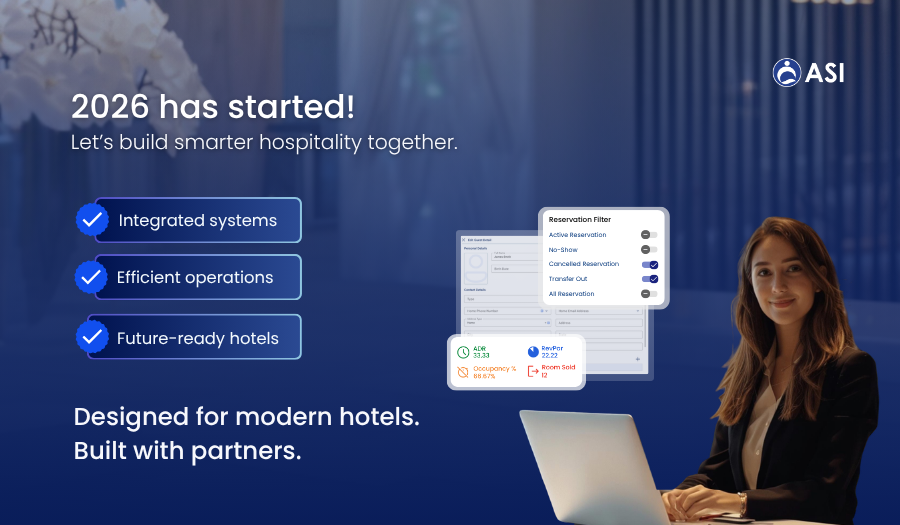

At some point, improving operations stops being about effort and starts being about support.
ASI PMS brings room status, rates, reservations, and reporting into one unified platform, helping hotels resolve issues as they happen, not after they reach the guest.Because when your systems carry the complexity, your teams don’t have to.
.png)
Find essential Hotel PMS features, Automation, Cloud Access, Real-time Analytics, Guest Personalization, Integrations, and Mobile Usability. Boost...
Discover the pros and cons of cloud-based vs. on-premises PMS systems to determine the best fit for your hotel's needs, budget, and future growth.
Learn how to efficiently set up and navigate ASI PMS to streamline hotel operations, enhance guest experiences, and boost direct reservations.